I came to amateur radio because I am fascinated by the phenomenon of radio wave propagation. Communication, yes, but also white noise, atmospheric noise. Even when there is nothing but noise, the radio fills me. None of this can be bought and none of it can be measured. And yet here I am, looking at a list of entities the way you look at a heavy burden.
This text is a reckoning with myself, and a question for whoever reads it: when does a hobby made of freedom and pleasure turn into a prison?
The list that never ends
DXCC is a brilliant invention: it divides the planet into entities, based on a list of criteria, and gives the hobby the aura of a collector’s game. A hundred entities for the first award, then the Honor Roll and the Top Honor Roll. Then every band and every mode, each category on its own. The DXCC Challenge was born. There is always one more line to fill, and that is the trap: a list that never ends never lets us reach the destination.
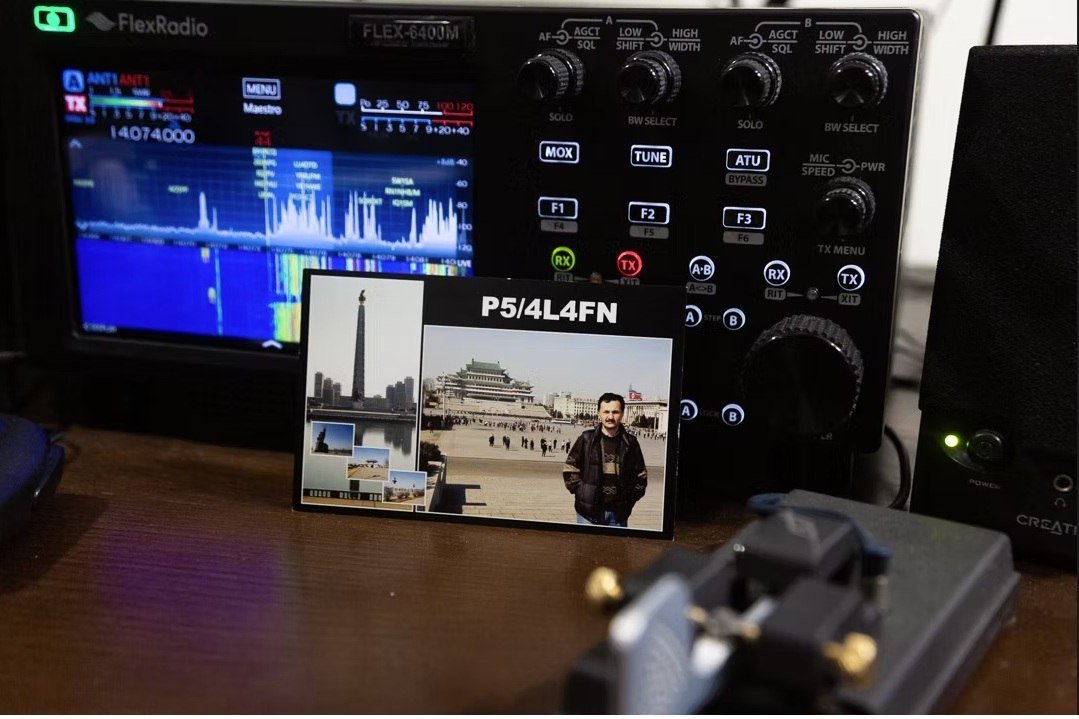
A rare entity, turned into a card.
Erich Fromm wrote a whole book about this, To Have or to Be?. In the “having” mode, what we are blurs into what we accumulate. I stop being someone who loves radio and become someone who has n entities. The problem is that what you have can always be compared with what someone else has, and then there is no rest.
The Stoics called this desiring without measure. Seneca put it in a sentence that says, more or less, that it is not the person who has little who is poor, but the one who wants more. Schopenhauer was gloomier: life swings between the pain of wanting and the boredom of having got it. Anyone who has worked a new entity knows the second half. The joy lasts minutes. Then the new country is just “one more” and the eyes go straight to the next missing one.
The other as a mirror
René Girard argued that our desires are rarely our own: we want what we see others wanting. Radio is a perfect machine for that. There are honor rolls, rankings, most-wanted lists, stations that always sit at the top. One visit to the ranking is enough for a person who was content to start feeling behind. To start feeling frustrated.
Rousseau distinguished healthy self-love (amour de soi), which is wanting to be well, from comparative self-love (amour-propre), which is wanting to be above. The first fits in anyone’s life. The second is never satisfied, because there is always someone with more.
Byung-Chul Han adds: in the achievement society nobody forces us to do anything any more. We exploit ourselves, demand more of ourselves, and call “motivation” what is really exhaustion. Nobody tells me to switch on the radio at three in the morning. I do it myself, voluntarily.
When the measure becomes the goal
There is a law usually called Goodhart’s law: when a measure becomes a target, it ceases to be a good measure. DXCC was created to measure our performance, to keep us motivated and entertained. When it becomes the thing itself, all that is left is the number.
And this is where everything goes bad. We all know cheating happens. Pirate stations using callsigns that are not theirs. Operations whose reports raise doubts in the community. Contacts that never took place, inflated logs in contests, disqualifications. People who make contacts on behalf of others (and how easy that has become in the digital era). This is not theory or rumour: it happens, in a hobby that lives on an almost absurd amount of trust. Nobody inspects us. The operator’s word is the referee, as long as it matches the DX station’s log.
I often wonder what drives someone to do it. It is not the contact, because a fake contact does not exist. It is not the entity, because an entity you did not work is worth nothing to anyone who knows the truth. What remains is status: appearing on the list, being seen, being better than the other. In other words, the thirst for prominence, which is human and universal, and which competitive radio programmes let grow unchecked. I am not against those programmes, let that be clear. I am against the obsession with them, and the methods some people use to feel like somebody.
The saddest part is the cost to others. Every act of cheating casts doubt on those who did the same thing honestly. Every unrestrained urge to contact a rare entity ends up creating a hostile climate, fertile ground for DQRM, for self-appointed police and for the envious. Competition taken to the extreme devours what feeds it.
The question I ask myself
Here I stop talking about the world and start talking about me. Why do I keep being obsessed with making new countries, especially by satellite, when I am only 5 entities short of the Mixed Top Honor Roll?
I try to be honest and lay the hypotheses on the table:
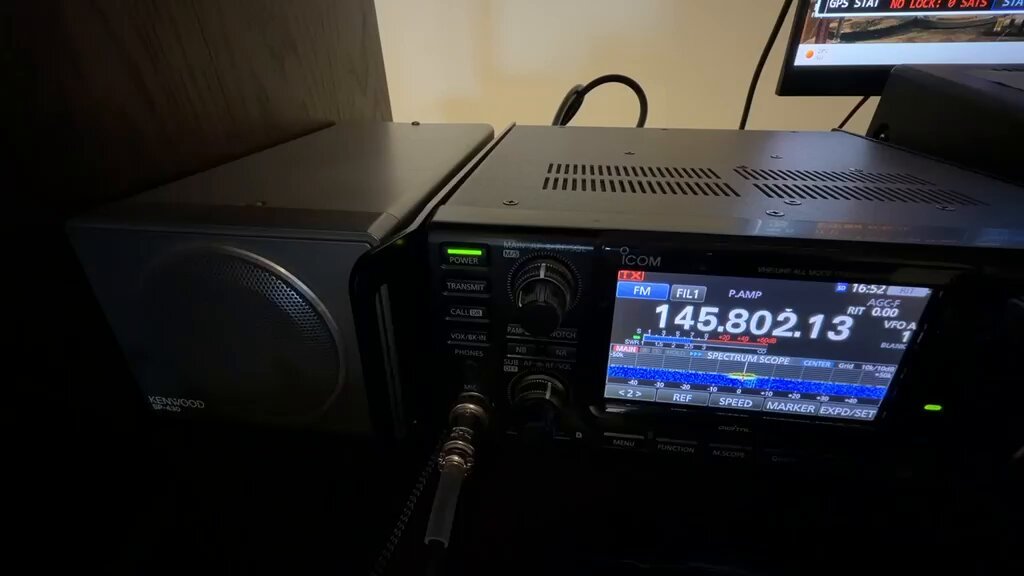
On VHF, waiting for the next pass.
- Personal achievement. Part of me says yes. Making new entities, the rarest ones, is hard: following the news, being on the radio on the right day and at the right time, not missing a thing of what is going on.
- The ranking. I also have to admit that I look at it. And that, when I do, I almost never feel better. I want more.
- The challenge of “not stopping”. If I stopped climbing the ranking, what would become of me? The number has become part of my identity, and stopping feels like a small bereavement.
- A reward that comes at unpredictable times. A satellite pass with nobody on the air, a DXpedition that vanishes from the band, an entity that only turns up now and then: that is the slot-machine mechanism. Unpredictability hooks more than certainty.
And one thing bothers me more than all the others: when I finally make a new country, what I feel is not quite joy. It is relief. The tension ends and I feel empty for a few minutes, until another opportunity to grow the list shows up. Relief and pleasure are not the same thing.
So I suspect that in part I am a hostage. That there is anxiety and frustration I manufactured myself, and that I pay for them in sleepless nights and in anxiety that does me harm. If that is so, the problem is not DXCC. It is my relationship with it.
Changing the relationship without dropping the list
I do not want to stop growing my tally. I like the challenge and I think it is possible to keep it. What I want is to change how I do it. Here are some ideas I am going to test, shared so that I commit to them:
- Process goals, not outcome goals. Instead of “make three new countries this quarter”, something like “work twenty passes with satellites I don’t know well yet”. The result stops deciding whether my month was good.
- Almost never look at the ranking. Once a quarter, on purpose. Take it off the screen where I see it every day.
- Days without a log. Switch on the radio just to listen, chat, hear a station I’d never heard of. Talk to an expedition in the Arctic, or to a lone operator in Antarctica. This is what brought me to radio.
- Tell what depends on me from what doesn’t. I control the antenna, the preparation, the patience. I do not control whether anyone is on the air, nor propagation, nor the life of whoever is operating the rare entity. The Stoics called this the dichotomy of control and they were right: frustration lives almost entirely on the side I don’t control.
- Put the other person at the centre. Helping someone make their first satellite contact, or their first HF DX, is worth more than one more entity. Competition is a zero-sum game (what one wins, the other loses); helping is not, and it brings far more satisfaction and pleasure.
- Record what I learned, not just what I won. A logbook (this site can serve that purpose too) with the antenna I improved, the pass that surprised me, the friendly operator.
- Decide what is “enough”. Epicurus separated natural and necessary desires from vain, endless ones. I don’t want to fix a number, I want to fix a rule: keep trying, but without the result deciding how I end the day.
Freedom again

The Antarctic station Novolazarevskaya.
I don’t believe the answer is to give up. DXCC is a beautiful compass: it points us to places in the world we would never go. The problem begins when it turns from a compass into an obsession.
If there is one question I should ask myself before switching on the radio, it is this: if nobody saw the result, would I still want to be here? If the answer is yes, all is well. If it is no, the reason I switch on the radio every day is no longer valid.
I’ll try. I’ll tell you how it goes.
73 and good QSOs, CT1ETE